01
Call or send your pin
Tell us where the vehicle is and whether it is exposed to live traffic.
Clear roadside help from our Gedling dispatch base, covering Nottingham and a 40-mile response area.
When a car stops, the useful questions are mechanical: will it select Neutral, can the electronic handbrake release, do the wheels roll, and is the drivetrain safe to tow? Our dispatch process starts there.
From 129 Arnold Lane in Gedling, we plan urgent recovery across Nottingham and a 40-mile operating area. City-centre ramps, motorway shoulders, damaged suspension and long-wheelbase vans are briefed before the truck is committed.
 EV & AWD loading checked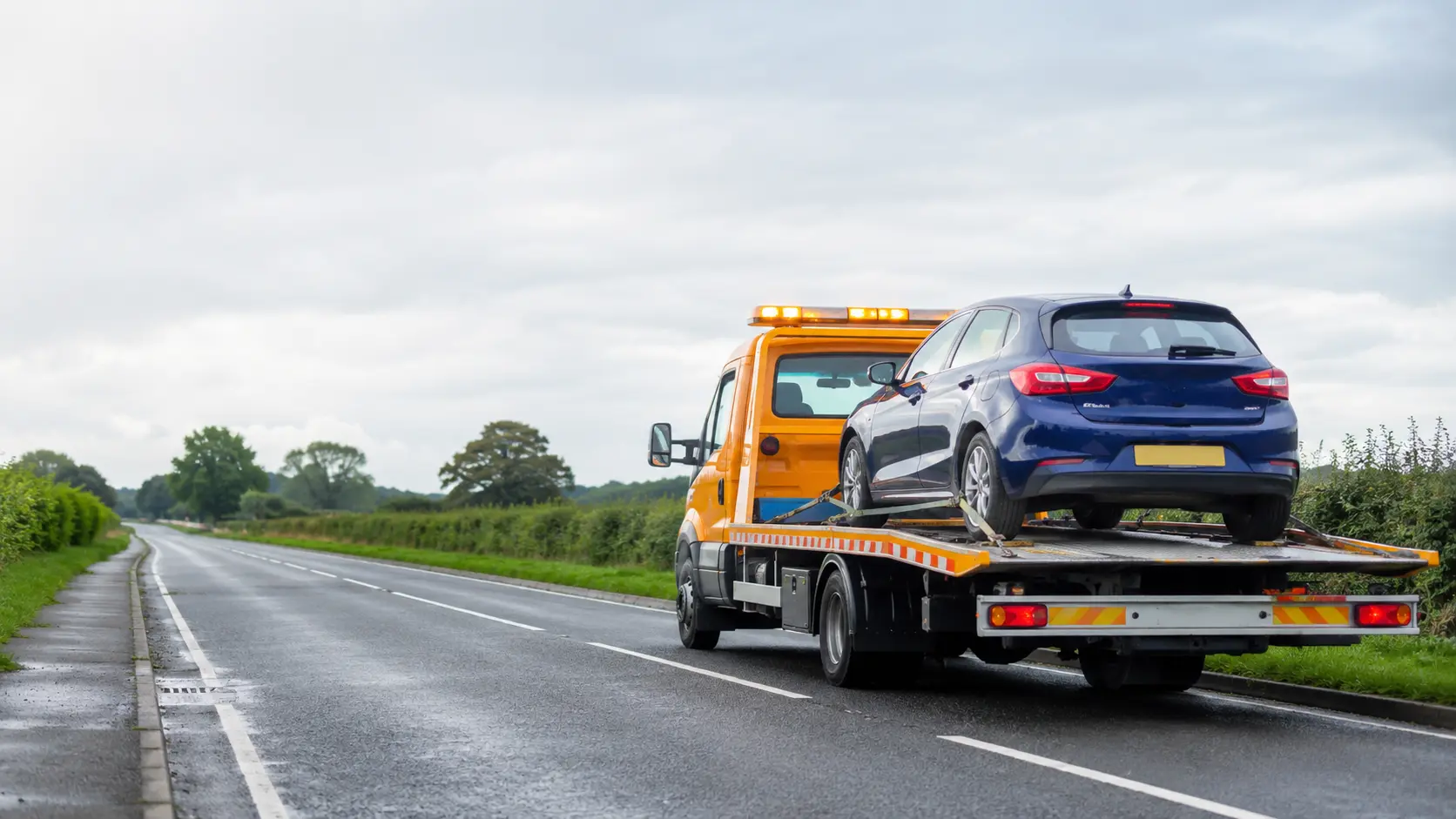
Cars, vans and suitable motorcycles recovered to your home, garage or another agreed destination.
View service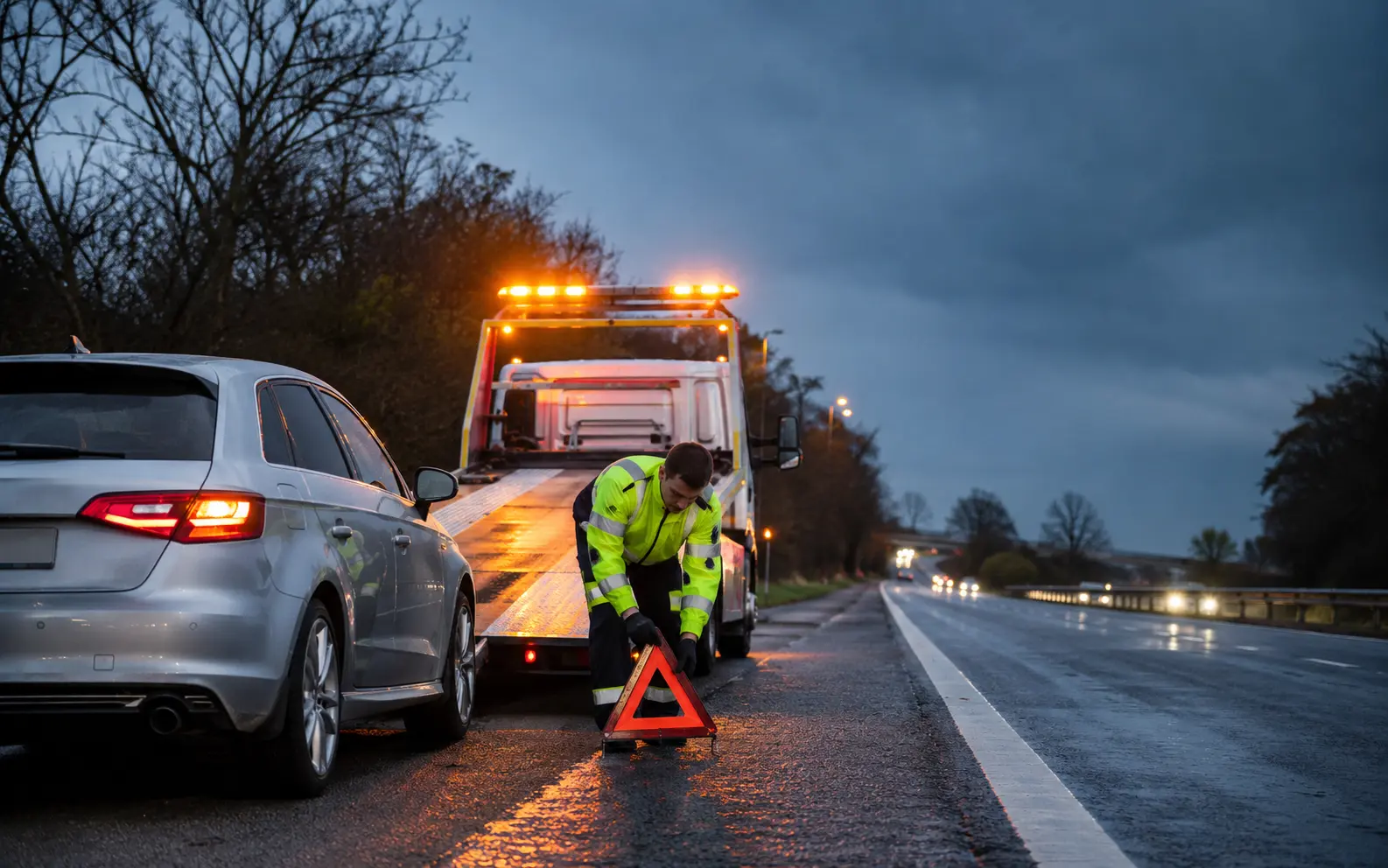
A practical loading plan for non-runners, damaged steering, seized wheels and vehicles locked in Park.
View serviceCareful collection after a collision, with damaged suspension, wheel position and safe access checked first.
View service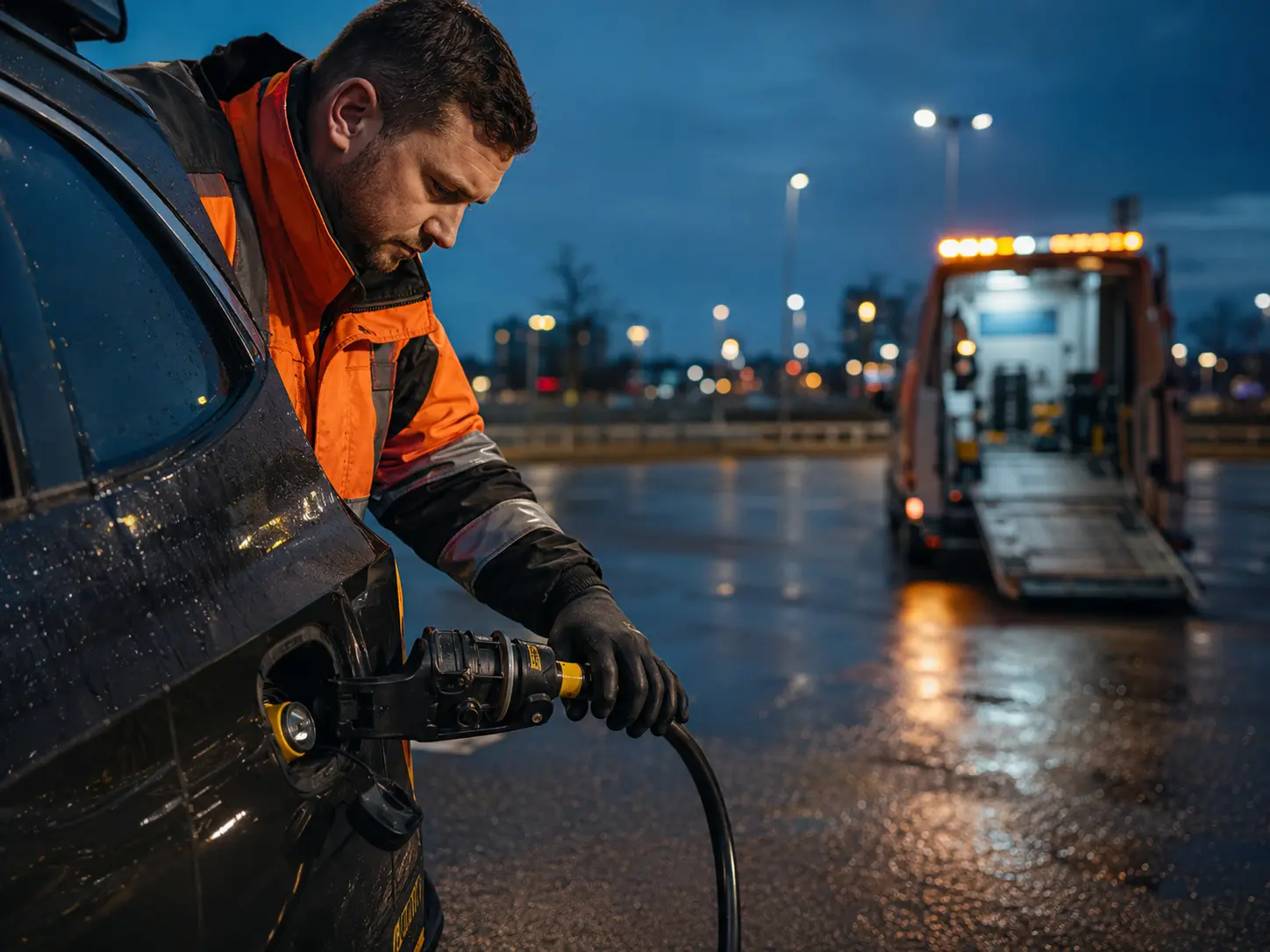
Jump starts, battery checks, puncture help, fuel problems and recovery when a roadside fix is not sensible.
View serviceExact location, registration and rolling status let us work out the truck, loading method and route without wasting time.
Choose your area for local recovery routes, access notes and service information.
Tell us where the vehicle is and whether it is exposed to live traffic.
Registration, weight, drivetrain, wheel condition and Park status decide the loading method.
We agree the destination, route and specialist equipment before collection.
The vehicle reaches the agreed home, garage, depot or receiving contact.
Recovery is safer and easier to price when the vehicle condition, access and destination are clear before the truck moves.
The vehicle, location and destination stay together in one clear brief from the first call.
Park lock, electronic handbrake, steering, wheel movement and drivetrain shape the equipment choice.
The route, vehicle condition and any specialist loading equipment are agreed before movement.
Driven wheels, 12-volt power and manufacturer towing requirements are checked before loading.
M1 shoulders, Lace Market ramps, Arnold Lane and the A612 each need a different safe approach.
Police pound, auction, garage and fleet jobs include authority, keys and receiving contacts.
Mechanical answers built around the faults drivers actually face.
An EV locked in Park needs a model-specific loading plan. Find out what to tell dispatch about the wheels, battery warnings and exact motorway location.
Read the storyA practical article for drivers who need clear, calm recovery information around Gedling.
Read the story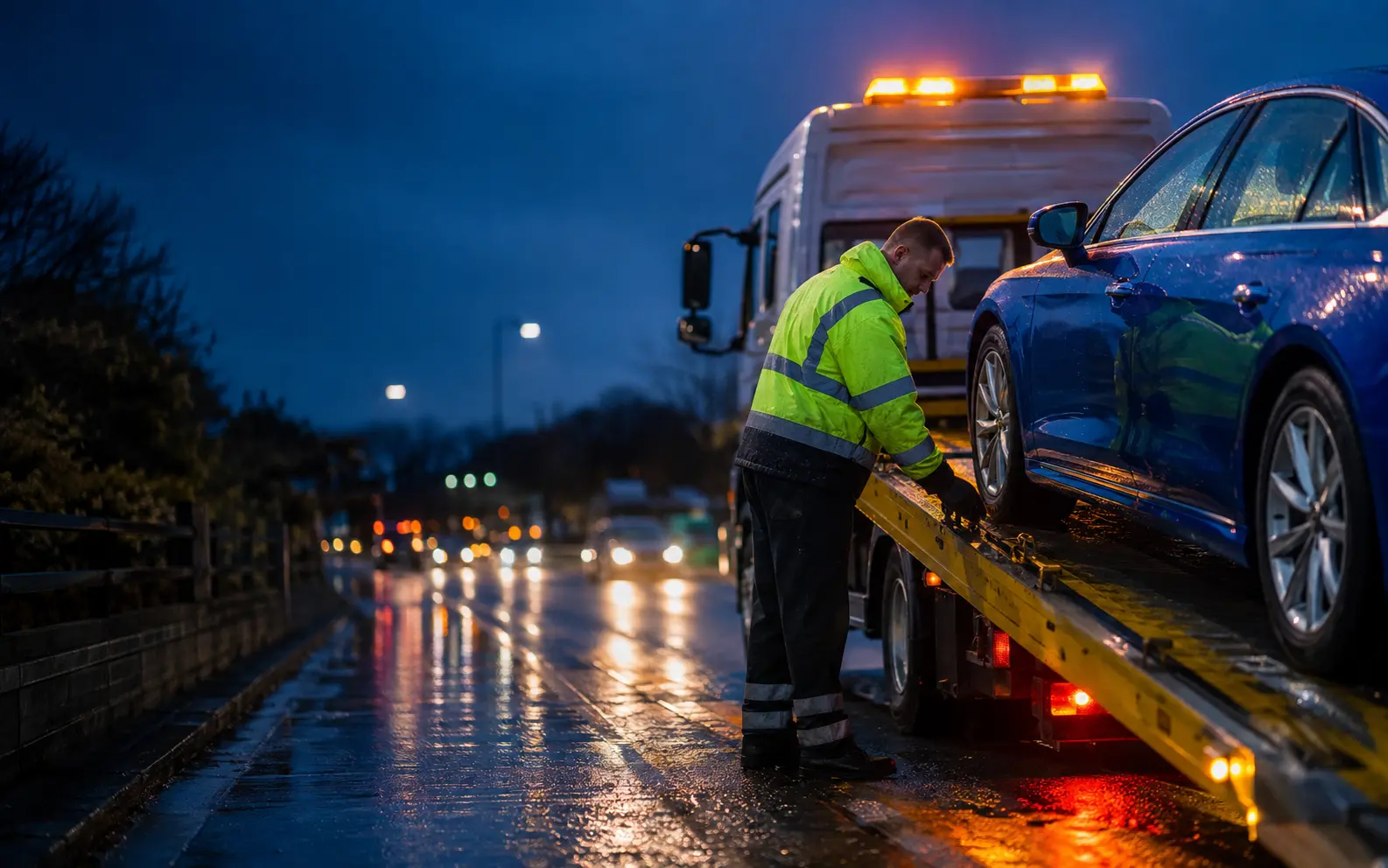
A practical article for drivers who need clear, calm recovery information around Arnold.
Read the storyFind the section you need: vehicle condition, access, costs, collection and handover.
Car Recoverys is based at 129 Arnold Lane, Gedling, Nottingham, NG4 4HF. The service area is the existing 40-mile Nottingham response area, with individual journeys confirmed through dispatch. Call +44 7429 293122 or use WhatsApp with the vehicle location, registration and a description of what has happened. This page helps you prepare a useful recovery brief, choose the right service and understand what still needs to be checked before a truck is sent.
A recovery enquiry does not need a perfect diagnosis. You may know only that the engine stopped, one wheel will not turn, or the car will not select a gear. Describe that observation in your own words. Saying “the dashboard lights come on but the engine does not turn” is more useful than guessing that a starter motor has failed. The dispatcher can then ask the questions that affect loading, access and the destination.
If you need a vehicle moved on a particular date, start with the collection and delivery arrangements. If you have broken down, start with your location and immediate situation. Those are different journeys. The information below keeps urgent recovery, roadside assistance and scheduled transport separate, so you can find the right route without filling in a quote form or working through a long questionnaire.
Your position is more important than collecting photographs or reading a registration plate. Follow the Highway Code guidance for breakdowns and incidents. If you cannot reach a place of relative safety and cannot leave the vehicle safely, the guidance is to stay belted in, keep hazard lights on and call 999 for the police. Do not walk into traffic to inspect the damage.
Tell dispatch whether you are on a live carriageway, a hard shoulder, an emergency area, a side road or a car park. Do not describe each of these as simply “on the M1”. An ordinary collection arrangement cannot substitute for traffic management. Follow instructions given by police or traffic officers, and update dispatch if they direct you to a different location or arrange removal themselves.
Give the registration, make and model if you have them. Include whether it is electric, hybrid, automatic, manual or all-wheel drive. Mention modifications that change height, weight or ground clearance, such as lowered suspension, a roof conversion, a camper interior or a loaded roof rack. You do not need to know the recovery procedure for that model; the useful task is to identify it accurately.
For vans, the registration alone does not explain the load. A vehicle that normally carries tools may be empty today, or it may contain machinery, stock and a full water tank. State what is on board and whether any of it can be removed at the collection point. The permitted and actual vehicle weights, dimensions and loading position affect equipment suitability. Do not rely on the appearance of the vehicle to estimate that suitability.
“It will not drive” can mean several things. The engine may not start while the car still rolls freely. The engine may run while a damaged wheel prevents movement. A gearbox may stay in Park, or the steering may remain locked because the key is missing. Explain these separately if you already know the answers; do not try an unsafe test to provide them.
Useful details include whether the keys are present, whether the wheels visibly point in different directions, whether a tyre has come off its rim, and whether the parking brake is applied. Mention fluid on the ground or bodywork touching a wheel. These observations can change the loading plan. Recovery is not simply a question of attaching a tow rope to whichever point looks strong enough.
Send the delivery postcode and the receiving person's name or business. Check opening hours with the garage, depot or storage provider. Ask whether someone can accept a non-running vehicle and where it should be unloaded. A driveway, kerbside space and workshop entrance have different access requirements. Include any gate, slope, height restriction or narrow turn at the destination as well as at collection.
If you have not chosen a destination, say so early. A truck can be dispatched only against an agreed arrangement, and an uncertain handover can cause avoidable waiting. Where an insurer, leasing company or fleet manager controls the destination, obtain its instructions before confirming a move. The dispatcher should not be left to guess who has authorised the vehicle to be delivered somewhere else.
Roadside assistance suits enquiries where an assessment or a suitable minor intervention may help. A flat battery, damaged tyre or fuel problem can look straightforward from the driver's seat, but the location and vehicle condition still matter. Tell the dispatcher what happened before the fault, whether there were warnings and whether anyone has already attempted work on the vehicle.
Do not assume a jump start is the correct service because the car will not start. A car may have an electrical supply problem, an immobiliser issue or a different fault. The important distinction is between starting the engine once and understanding whether it is sensible to continue the journey. Ask what the proposed visit includes, what may require further diagnosis and what happens if recovery becomes necessary instead.
Breakdown recovery is the more appropriate starting point when the vehicle cannot continue and needs to be transported. The destination might be home, a repairer or another agreed location. The enquiry should cover loading condition, collection access, transport distance and unloading arrangements. A recovery booking does not automatically include diagnosing and repairing the underlying fault.
If you are uncertain, choose the closest description and explain the symptoms. You will not improve the booking by selecting a more technical service name than the evidence supports. A concise account of the failure lets the operator decide which additional questions are relevant. It also helps separate the cost of transporting the vehicle from any later garage work, which should be agreed with the repairer.
For EV and hybrid recovery, tell dispatch the model, whether the vehicle powers on, whether it is plugged into a charger and whether a transport mode can already be selected. A vehicle that has stopped charging is a different enquiry from a vehicle with collision damage. Mention dashboard messages exactly as displayed where you can read them without putting yourself at risk.
Do not treat guidance for one model as permission to move another model in the same way. The operator needs the manufacturer's instructions for the actual vehicle. Wheel movement, parking-brake release, towing points and transport mode are model-specific. A photograph of a warning screen may support the conversation; it cannot establish that a drivetrain or high-voltage system is safe to handle.
A car locked in Park may need a different loading arrangement from one that rolls and steers. Wheel skates, controlled winching or another method may be considered by the recovery operator, but equipment should be selected for the vehicle and the scene. Do not force a selector, bypass an electronic handbrake or drag locked wheels because someone has suggested a general procedure online.
All-wheel drive also needs specific attention. Explain the drivetrain when booking rather than assuming every towing method is interchangeable. Ask the dispatcher to confirm how the vehicle will be carried and how the manufacturer requirements will be checked. If you have the owner's manual or a manufacturer's recovery guide, share it. Keep technical intervention with the attending operator rather than trying to prepare the vehicle yourself.
Van recovery needs a useful picture of the whole vehicle: model, body type, wheelbase, roof height, load and condition. A long-wheelbase van may fit through an entrance while the recovery vehicle does not have room to turn or load. Note delivery-yard restrictions, bollards, low branches, shutters and one-way access. The receiving site must also have room for the unloading method.
List unusual contents such as machinery, cylinders, liquids or items that could move during loading. Let the dispatcher decide what additional information is needed. Do not conceal a heavy load to obtain a smaller-vehicle quote. If stock needs to be transferred, arrange that with the business responsible for it and discuss whether the transfer changes the collection position or timing.
For a company vehicle, the driver may not be the person who can approve costs or choose a repairer. Provide one reachable authorising contact and the correct invoicing details. If a purchase order is required, arrange it before dispatch. Keep the driver's mobile number available for location updates while the fleet contact handles commercial approval.
The fleet and business page is the route for coordinated collections, downtime response and trade movements. It is useful to state whether the job is a one-off recovery or part of a wider movement plan. Give each vehicle its own registration, condition and destination. A list of vehicles without individual readiness details can conceal very different loading requirements.
A height restriction, underground ramp or narrow turn can rule out an otherwise suitable loading position. Tell dispatch the posted restriction if you can see it safely. Mention the floor, bay, entrance road and whether there is an alternative access point. A postcode for a large car park often leads to the pedestrian entrance rather than the vehicle entrance.
Low-clearance cars require particular care at ramps and changes of gradient. Explain whether the car is lowered and whether bodywork is already touching the ground. If access cannot be confirmed remotely, the plan may need further assessment. Do not move barriers, park across an exit or ask other drivers to push the vehicle into traffic just to create a loading space.
Shopping centres, residential blocks, workplaces and secure compounds may have a parking operator or facilities contact. Ask who can authorise access and whether a recovery vehicle needs to be registered with security. A gate code should be shared privately with the person who needs it, not posted in a public review or website enquiry.
Clarify any charges or restrictions imposed by the site owner. A recovery booking does not remove parking rules or authorise entry into a locked compound. If someone must attend to open a gate, confirm their availability at the planned time. Keep that contact separate from the garage receiving the vehicle, because both ends of the move may need independent coordination.
For accident recovery, describe what is visible: collapsed suspension, a wheel at an unusual angle, leaking fluid, broken glass or loose panels. Do not crawl under the vehicle or approach it if there is an immediate danger. Police or emergency-service directions take priority over the commercial collection arrangement.
If photographs are safe to take, a wider view of the vehicle's position is often more useful for planning than a close-up of a scratch. Include the space around it without sharing unnecessary personal information about other people. Tell dispatch if a previous recovery attempt has moved the car or if parts have been removed. The condition at collection is the condition that must drive the plan.
A damaged car may be subject to insurer instructions, police requirements, finance arrangements or a storage provider's release process. Explain that status before arranging transport. Car Recoverys cannot determine ownership or release authority from a registration number alone. Have the relevant contact confirm where the vehicle may go and which documents are required at collection.
If a repairer cannot accept the car, agree another destination before departure. Storage and transport are separate arrangements; do not assume either is included in the other. Ask the receiving party whether it can accommodate the vehicle in its current condition and whether unloading is possible during the proposed arrival window.
Use planned transport for a garage-to-garage move, auction collection, purchased vehicle or another scheduled journey. Give the collection date, registration, seller or release contact and delivery postcode. Confirm whether the vehicle runs, whether keys are present and whether the battery can operate the necessary locks or controls. A sale listing may not describe the current condition accurately.
Avoid choosing a collection time before the seller, auction or garage has confirmed that the vehicle is ready. Payment completion, paperwork and release instructions belong to that provider's process. Obtain the actual release reference rather than assuming the recovery operator can resolve an incomplete purchase at the gate. If release is delayed, update dispatch promptly.
The vehicle transportation service should be discussed as a collection, carriage and handover arrangement. Confirm who records the condition, who supplies keys and who acknowledges delivery. Ask whether any special instructions must travel with the vehicle, such as an alarm sequence or a workshop contact. Do not put passwords or unrelated financial documents inside a public message.
For a classic or modified car, identify ground-clearance concerns and any known handling restrictions. Share the facts rather than an assumed equipment solution. If the receiving person will not be present, make an explicit arrangement with the dispatcher and the property controller. Leaving a vehicle at an unconfirmed address creates a problem even if the driving part of the journey is completed correctly.
A meaningful quote is based on the actual collection location, destination, vehicle condition and access requirements. Ask what loading, travel and unloading are included. Clarify whether waiting, difficult access, specialist handling or a changed destination would alter the price. The website does not publish a starting-price figure because a minimum number without job context can be misleading.
When comparing quotations, give every operator the same information. A vehicle that rolls on a level driveway is not the same job as a vehicle with locked wheels in a restricted car park. Compare what is included as well as the total. Ask whether the price is a fixed quote for the described work or an estimate subject to an inspection, and obtain the answer before authorising dispatch.
If the vehicle's condition, position or destination changes, tell the dispatcher immediately. An agreed route to a local garage may no longer apply if the garage closes and the vehicle must go elsewhere. A previously free-rolling wheel may become stuck after another intervention. These changes should be discussed and any price adjustment confirmed rather than left until unloading.
Keep a record of the agreed scope and contact details. Ask who should approve additional work if you become unreachable during the journey. For business jobs, that may be a fleet manager rather than the driver. For private jobs, nominate someone only if you want them to have that authority. A clear approval route helps everyone avoid acting on contradictory instructions.
The dispatch base is in Gedling. The areas hub lists the existing Nottingham coverage locations, including nearby areas such as Arnold, Carlton and West Bridgford. A listed area is part of the service map, not a claim that there is a separate office in that location. Availability and the specific journey still need to be confirmed when you contact dispatch.
For a city-centre collection, tell the operator whether the car is on a public road, inside a controlled car park or behind a building. A business postcode can cover several entrances. For an address outside the centre, mention whether the final approach is a driveway, private lane, farm access or industrial yard. The operator needs the practical access description, not a general claim that the location is easy to find.
On a dual carriageway or motorway, direction of travel and the last junction passed are important. If a location pin places you on the opposite carriageway, correct it in the message rather than assuming dispatch can infer the error. Share any marker information you can read from a safe position. Never walk along the road or cross a carriageway to obtain it.
The 40-mile response area is an enquiry boundary, not an arrival-time promise or a guarantee that every destination is included. Road conditions, available equipment and the nature of the job affect arrangements. Give the complete collection and destination information even when both places appear nearby on a map. Ask dispatch to confirm the practical plan for that journey.
Tell dispatch how many people are with the vehicle and whether anyone needs mobility support, a child seat or another specific arrangement. Do not assume a recovery cab can accommodate every passenger. Ask what transport arrangements are available before making plans around them. If someone can collect your passengers independently, coordinate the meeting place without exposing them to traffic.
Mention pets and mobility equipment as part of the conversation. A wheelchair, walking aid or large item may need a different handover arrangement from an ordinary bag. Do not leave someone beside the road while trying to negotiate vehicle logistics. If circumstances change, such as a passenger becoming unwell, update the appropriate emergency service and dispatch rather than continuing with an unsuitable waiting plan.
Where it is safe, identify the keys, documents and belongings you need during the rest of the day. Do not delay moving to safety to collect possessions. Ask how keys will be passed to the operator and the receiving garage. If a key is needed to access a separate building or contains unrelated access devices, discuss an alternative before handing over the whole set.
Give the receiving party any vehicle instructions it genuinely needs. Avoid leaving valuables or confidential paperwork loose in the car without discussion. If the vehicle is inaccessible or damaged, say so rather than attempting to retrieve items through broken glass or unstable bodywork. The priority is an orderly handover, not emptying the vehicle at any cost.
For motorcycle recovery, tell dispatch whether the motorcycle is upright, whether either wheel turns and whether the handlebars move normally. Include its make and model, any luggage and visible collision damage. A motorcycle with a damaged stand or bent wheel presents a different collection problem from a motorcycle that simply will not start. Let the operator assess the necessary securing and loading arrangements.
Do not assume a motorcycle can be transported with the same equipment or restraint method as a car. Describe fairings, panniers or accessories that affect access to approved securing points. If a wheel lock or alarm is fitted, explain who has the key or control. You should not remove damaged parts, dismantle the motorcycle or try to lift it solely to make the booking appear simpler.
Ask the destination whether it has a stable receiving position and someone able to accept the motorcycle. A workshop that has agreed to inspect it may still need a collection reference or arrival window. If it will be delivered to a home, consider whether access involves steps, loose ground or a narrow passage. These details should be part of the transport discussion before the operator arrives.
Keep riding equipment and personal belongings separate from the vehicle handover wherever it is safe to do so. Tell dispatch if luggage cannot be removed or contains fragile items. The purpose of this information is to prepare the handling plan, not to promise that every motorcycle can be collected from every position. Equipment and access still need to be matched to the actual scene.
If you suspect the wrong fuel was added, say what fuel you intended to buy, what the receipt or pump indicates, and whether the vehicle has subsequently been started or driven. Give the current location, which may still be a filling-station forecourt. The wrong-fuel recovery page is the relevant service route. Do not keep operating the vehicle to find out whether the symptom clears.
Tell dispatch if filling-station staff have asked you to remain in a particular position or have restricted the area. A forecourt has its own traffic and safety arrangements, and a recovery operator needs to coordinate with the site rather than assume ordinary roadside access. Keep receipts or transaction information for your own records; there is no need to send full payment-card details to describe the event.
Fuel-system work and recovery are not interchangeable services. Ask whether the proposed arrangement is to move the vehicle to an appropriate repairer, to arrange specialist attention, or to assess another concern. Do not assume that a transport quote includes draining, cleaning, replacement fuel or diagnosis. The scope should say who is carrying out each part and where that work will take place.
If the vehicle has already been moved or another provider has attended, describe what was done and any instructions you received. Avoid presenting an uncertain assumption as a completed repair. The next operator needs an accurate sequence of events so that transport and handover can be planned consistently. Keep the receiving repairer informed about the suspected fuel issue before the vehicle arrives, so the workshop understands why it has been brought in.
Before dispatch is confirmed, check that the operator has the location, registration, movement condition, access description and agreed destination. Include one number that will be answered and the name of any separate authorising person. You do not need to repeat the entire story every time; send a correction when a material detail changes.
Before the vehicle reaches its destination, make sure the receiver is still available and knows it is a non-runner if that is the case. Ask how the handover will be acknowledged. Recovery ends with a vehicle placed in an agreed receiving position, not merely with a truck reaching a postcode. A few specific arrangements made early can prevent a second avoidable movement later.
If you are helping a relative, employee or customer, distinguish your role from the person at the vehicle. Give dispatch your own contact details, the driver's reachable number and the name of the person authorised to approve the movement. Tell the driver what has actually been confirmed. Avoid telling them a truck is booked while the price, destination or access arrangements are still being discussed.
Keep a short written brief that both contacts can read. It should contain the agreed location, registration, destination and any known loading restriction. If either person changes the destination, update everyone using the same information. Messages spread across several unrelated conversations can leave an operator working from an earlier instruction. One current brief is particularly useful when a shift changes or a fleet manager hands the job to a colleague.
Do not share more personal information than the booking needs. An operator may need a release reference or a named authorising contact, but not the driver's unrelated financial records or account passwords. Where an auction, police pound or insurer requests documents, confirm the proper recipient and use that provider's process. Keep commercial recovery instructions separate from any disputed ownership or insurance decision.
Yes. Describe the symptoms and the vehicle's current condition instead of diagnosing a component. Explain whether it starts, rolls and steers, what happened immediately before it stopped, and whether the keys are available. A fault name such as “battery” or “gearbox” may be only a guess. Dispatch uses the movement and access information to discuss the collection method; a repairer's later diagnosis is a separate piece of work.
No. A message provides information, but you should obtain a clear booking confirmation from dispatch. Confirm the collection location, destination, agreed price or pricing basis and contact arrangements. If your situation is urgent, call rather than relying on a message being seen immediately. Keep your phone reachable after confirmation, and tell dispatch if police, another operator or your insurer changes the collection plan.
Send a correction in words, including the road name, direction and entrance information you already know. A pin can place a vehicle on a nearby side road or the opposite carriageway. Do not move into danger to improve it. Where safe, explain the last junction passed or a visible road marker. Ask the dispatcher to repeat the understood location so both of you are discussing the same approach.
Choose a destination that can accept the vehicle in its present condition and that you are authorised to use. A garage should confirm it has space and someone available to receive the car. A home driveway needs a suitable unloading position and permission from the property controller. If an insurer, leasing company or fleet provider has issued instructions, check those before agreeing an alternative. Recovery itself does not secure a repair appointment.
Yes, but missing keys must be declared before equipment is selected. The absence of a key can affect locks, steering, the parking brake and the ability to select a transport mode. Proof of release or ownership may also need to be considered by the relevant collection provider. Explain why keys are unavailable and whether someone else holds them. Do not assume the operator will open or reprogramme the vehicle as part of an ordinary transport booking.
No. An EV may have a low traction-battery charge, a low-voltage electrical problem or another fault that prevents movement. Give the model and the displayed message rather than selecting a procedure based on a general description. Tell dispatch whether the vehicle can power on and whether it is connected to a charger. The operator must check the appropriate manufacturer instructions before moving it; this page does not provide a universal release method.
You can describe a requirement or a manufacturer's transport instruction, but equipment suitability must be checked against the complete job. Vehicle weight, wheel condition, ground clearance, access and unloading space all matter. Requesting a flatbed alone does not establish that it can reach an underground bay or load a car with collapsed suspension. Share the underlying reason for your request so dispatch can confirm the right arrangement.
Provide the registration, driver contact, vehicle location, loading condition, agreed destination and one person authorised to approve costs. Include purchase-order or invoicing requirements before dispatch. If a repairer must be selected from an approved network, make that instruction explicit. The driver and fleet manager should give compatible directions; conflicting destination or payment instructions can delay the collection even when the physical vehicle details are clear.
It can be discussed, but the original price and timing may no longer apply. Contact dispatch as soon as the change is known and obtain a revised agreement before assuming the vehicle will go elsewhere. Explain why the original destination cannot receive it and check access at the replacement site. A last-minute change is easier to manage when the new receiver is confirmed and the authorised person remains reachable.
No. Starting the engine once does not by itself explain why the vehicle failed to start. Tell the operator about repeated discharge, warning lights or previous attempts. Ask what checks are included in the agreed visit and whether further diagnosis is recommended. If the vehicle cannot sensibly continue, discuss recovery as a separate next step. Avoid assuming that a successful start is a guarantee that the underlying problem will not recur.
An auction collection usually depends on a release process, a booking slot and an accurate description of the vehicle's condition. Confirm payment, collection authority, keys and any release reference with the auction provider first. Tell dispatch whether the vehicle runs and whether the listing mentions loading damage or missing parts. The recovery operator should arrive with an agreed collection brief, not with an expectation of resolving incomplete purchase arrangements at the site.
Ask before booking. The number of passengers, available seating and individual needs must be discussed rather than assumed. Mention children, mobility requirements and pets. If alternative transport is needed, plan it from a safe meeting point. A vehicle booking should not leave people without a workable onward arrangement. Dispatch can explain what is available for the actual job; a generic website statement cannot determine cab capacity on the day.
No. The published address is the Gedling dispatch base. Area pages describe the existing service coverage around Nottingham and do not establish additional offices. Give the actual collection and destination postcodes when enquiring, including for locations shown in the directory. Dispatch will confirm availability and journey details. The presence of a town name on the website is not a promise of a truck already stationed in that town.
Contact dispatch before the vehicle is taken there and arrange a confirmed alternative with the person authorising the move. Check that the replacement destination has space, access and someone who can receive a non-running vehicle. Do not assume the operator can leave the car outside a locked workshop. Any additional journey or waiting should be discussed as part of the changed scope, with the price and handover position agreed.
Keep the agreed collection and destination details, the service contact and any receipt or handover record supplied. Note which person accepted the vehicle and where the keys were delivered. If you have questions about the transport, raise them with the recovery contact using those facts. Questions about diagnosis, parts or repair completion belong to the receiving repairer unless they were expressly included in the recovery arrangement.
Have these three items ready when you call or message:
Dispatch base: 129 Arnold Lane, Gedling, Nottingham, NG4 4HF.
These page-specific answers resolve practical service, booking, collection and handover questions for this exact subject and location.
Begin with personal safety and the exact location, then describe the vehicle without carrying out an unsafe test. The booking should use a practical collection and handover plan based on the real vehicle and scene as the decision framework rather than an assumed procedure. Any change should be confirmed with the dispatcher before the vehicle is moved. Keep the driver, approving contact and receiver working from the same current brief. That gives the operator enough context to explain the next step without turning a general answer into a promise about a particular vehicle, road or destination.
Describe the outcome you need and the vehicle’s movement condition; dispatch can match the enquiry to a suitable service route. The booking should use a practical collection and handover plan based on the real vehicle and scene as the decision framework rather than an assumed procedure. Do not carry out a risky inspection solely to answer the question; say which points remain unknown. Keep the driver, approving contact and receiver working from the same current brief. That gives the operator enough context to explain the next step without turning a general answer into a promise about a particular vehicle, road or destination.
Have the registration, make, model, exact position, keys, wheel movement, steering, access and destination available. Because Nottingham may involve private land, gated compounds, multi-storey parking, narrow approaches, sloping drives and public roads with little safe loading space, describe the real access at both collection and destination. Any change should be confirmed with the dispatcher before the vehicle is moved. Keep the driver, approving contact and receiver working from the same current brief. That gives the operator enough context to explain the next step without turning a general answer into a promise about a particular vehicle, road or destination.
Correct the pin in words with the road, direction, entrance or safe landmark and never move into danger to improve it. The booking should use a practical collection and handover plan based on the real vehicle and scene as the decision framework rather than an assumed procedure. Do not carry out a risky inspection solely to answer the question; say which points remain unknown. Keep the driver, approving contact and receiver working from the same current brief. That gives the operator enough context to explain the next step without turning a general answer into a promise about a particular vehicle, road or destination.
Yes, but locked wheels, collapsed suspension or steering problems must be declared before equipment is selected. For this general vehicle recovery and transport enquiry, explain the exact location, registration, vehicle type, symptoms, wheel movement, steering, keys, access, destination and the person authorised to approve the movement. Any change should be confirmed with the dispatcher before the vehicle is moved. Keep the driver, approving contact and receiver working from the same current brief. That gives the operator enough context to explain the next step without turning a general answer into a promise about a particular vehicle, road or destination.
Explain who has the keys and which controls still operate; ordinary recovery does not automatically include entry or key programming. Because Nottingham may involve private land, gated compounds, multi-storey parking, narrow approaches, sloping drives and public roads with little safe loading space, describe the real access at both collection and destination. The website cannot confirm equipment, timing or authority until the actual facts are checked. Keep the driver, approving contact and receiver working from the same current brief. That gives the operator enough context to explain the next step without turning a general answer into a promise about a particular vehicle, road or destination.
The exact model and manufacturer recovery information matter because driven wheels, transport modes and parking brakes differ. For this general vehicle recovery and transport enquiry, explain the exact location, registration, vehicle type, symptoms, wheel movement, steering, keys, access, destination and the person authorised to approve the movement. The website cannot confirm equipment, timing or authority until the actual facts are checked. Keep the driver, approving contact and receiver working from the same current brief. That gives the operator enough context to explain the next step without turning a general answer into a promise about a particular vehicle, road or destination.
Follow road-authority and emergency instructions first; commercial recovery proceeds only from a position where the scene can be managed safely. For this general vehicle recovery and transport enquiry, explain the exact location, registration, vehicle type, symptoms, wheel movement, steering, keys, access, destination and the person authorised to approve the movement. Any change should be confirmed with the dispatcher before the vehicle is moved. Keep the driver, approving contact and receiver working from the same current brief. That gives the operator enough context to explain the next step without turning a general answer into a promise about a particular vehicle, road or destination.
Give height, floor, bay, slope, gate and turning details and identify the person who can authorise site entry. For this general vehicle recovery and transport enquiry, explain the exact location, registration, vehicle type, symptoms, wheel movement, steering, keys, access, destination and the person authorised to approve the movement. Do not carry out a risky inspection solely to answer the question; say which points remain unknown. Keep the driver, approving contact and receiver working from the same current brief. That gives the operator enough context to explain the next step without turning a general answer into a promise about a particular vehicle, road or destination.
A destination that can accept the vehicle should be confirmed, or the uncertainty should be raised before route and price are agreed. The booking should use a practical collection and handover plan based on the real vehicle and scene as the decision framework rather than an assumed procedure. The website cannot confirm equipment, timing or authority until the actual facts are checked. Keep the driver, approving contact and receiver working from the same current brief. That gives the operator enough context to explain the next step without turning a general answer into a promise about a particular vehicle, road or destination.
Passenger arrangements depend on seating and the actual job, so needs should be discussed separately from the vehicle movement. For this general vehicle recovery and transport enquiry, explain the exact location, registration, vehicle type, symptoms, wheel movement, steering, keys, access, destination and the person authorised to approve the movement. The website cannot confirm equipment, timing or authority until the actual facts are checked. Keep the driver, approving contact and receiver working from the same current brief. That gives the operator enough context to explain the next step without turning a general answer into a promise about a particular vehicle, road or destination.
Vehicle condition, loading, access, route, waiting, specialist handling and destination changes can all alter the described scope. Because Nottingham may involve private land, gated compounds, multi-storey parking, narrow approaches, sloping drives and public roads with little safe loading space, describe the real access at both collection and destination. Do not carry out a risky inspection solely to answer the question; say which points remain unknown. Keep the driver, approving contact and receiver working from the same current brief. That gives the operator enough context to explain the next step without turning a general answer into a promise about a particular vehicle, road or destination.
Yes, but release references, ownership or authority, payment approval and receiving instructions must be organised before collection. The booking should use a practical collection and handover plan based on the real vehicle and scene as the decision framework rather than an assumed procedure. Do not carry out a risky inspection solely to answer the question; say which points remain unknown. Keep the driver, approving contact and receiver working from the same current brief. That gives the operator enough context to explain the next step without turning a general answer into a promise about a particular vehicle, road or destination.
Send one clear update and obtain confirmation of the revised scope rather than assuming the original quote and timing continue. The booking should use a practical collection and handover plan based on the real vehicle and scene as the decision framework rather than an assumed procedure. Any change should be confirmed with the dispatcher before the vehicle is moved. Keep the driver, approving contact and receiver working from the same current brief. That gives the operator enough context to explain the next step without turning a general answer into a promise about a particular vehicle, road or destination.
Remain in the safest available place, keep your phone reachable and update dispatch if authorities or conditions move the vehicle or passengers. Because Nottingham may involve private land, gated compounds, multi-storey parking, narrow approaches, sloping drives and public roads with little safe loading space, describe the real access at both collection and destination. Do not carry out a risky inspection solely to answer the question; say which points remain unknown. Keep the driver, approving contact and receiver working from the same current brief. That gives the operator enough context to explain the next step without turning a general answer into a promise about a particular vehicle, road or destination.
Control keys and essential documents, remove items only when safe and record what remains in the vehicle at handover. The booking should use a practical collection and handover plan based on the real vehicle and scene as the decision framework rather than an assumed procedure. Do not carry out a risky inspection solely to answer the question; say which points remain unknown. Keep the driver, approving contact and receiver working from the same current brief. That gives the operator enough context to explain the next step without turning a general answer into a promise about a particular vehicle, road or destination.
Keep the route, contact, receipt, receiving person, unloading position and key-handover information for later questions. For this general vehicle recovery and transport enquiry, explain the exact location, registration, vehicle type, symptoms, wheel movement, steering, keys, access, destination and the person authorised to approve the movement. The website cannot confirm equipment, timing or authority until the actual facts are checked. Keep the driver, approving contact and receiver working from the same current brief. That gives the operator enough context to explain the next step without turning a general answer into a promise about a particular vehicle, road or destination.
Not automatically; those services and decisions should be identified and agreed separately with the responsible provider. The booking should use a practical collection and handover plan based on the real vehicle and scene as the decision framework rather than an assumed procedure. The website cannot confirm equipment, timing or authority until the actual facts are checked. Keep the driver, approving contact and receiver working from the same current brief. That gives the operator enough context to explain the next step without turning a general answer into a promise about a particular vehicle, road or destination.